The Aptos Median Doesn't Tell You Which Aptos You're Buying
September 24, 2026
September 24, 2026
A buyer scrolling listings in Aptos this fall will see two homes priced within a few thousand dollars of each other and assume they're looking at comparable purchases. They rarely are. One might be a condominium inside Seascape Resort, where the deed comes with a rule most buyers never think to ask about: no one, owner included, is allowed to occupy the unit for more than 90 days a year. The other might sit two miles inland in a quiet development like Rio Highlands, where you can move in permanently, host holidays, and never think about occupancy limits again.
That gap is the real story behind Aptos real estate right now. The town's median price, the number every portal quotes with confidence, is an average of at least three distinct ownership situations that behave nothing alike once you're past the offer stage. Knowing which one you're stepping into changes your financing, your insurance shopping, and in some cases whether you can even live in the home you're buying.
Pull up Aptos market data this year and you'll find real disagreement between sources that are supposedly measuring the same town. Houzeo put the Aptos median sale price at $1,249,500 in June 2026, with homes moving in a median of 48 days and selling at 96.2% of list. Movoto, looking at the same month, listed a median of $1,237,000 with a longer 71-day market time. Redfin's three-month window ending May 2026 showed a lower median of $1.0 million, with days on market stretching to 73, nearly double the 39 days recorded a year earlier.
Even Zillow's own tools don't agree with each other. One Zillow page pegs the typical Aptos home value at $1,382,807, down 7.2% over the past year. A separate Zillow page for a slightly different Aptos boundary puts it at $1,348,891, up 1.5% over the same stretch. Same brand, same month, opposite trend lines.
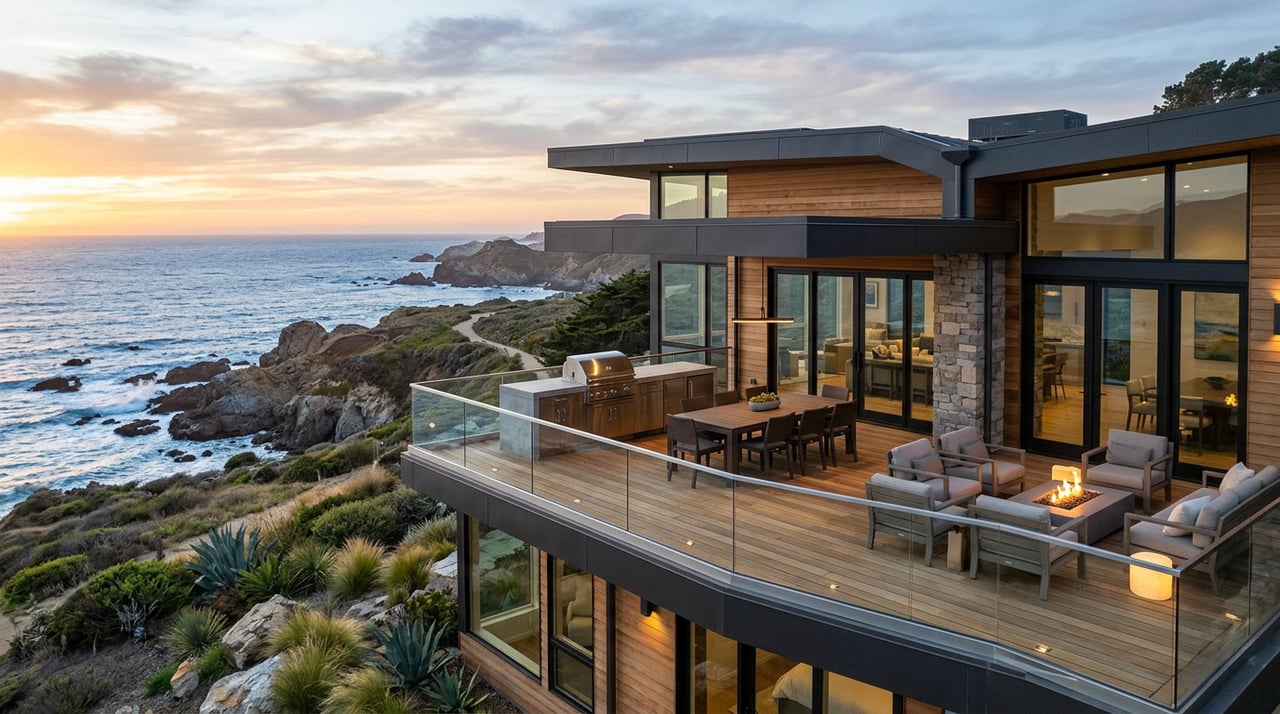
That's not sloppy data. It's what happens when a dataset labeled "Aptos" is quietly averaging a $625,000 studio condo inside a resort HOA, a $4 million bluff-top estate with an ocean view and an erosion report in the seller's file, and a $975,000 three-bedroom house two miles from the beach with none of either property's complications. Widen or narrow the zip code boundary by a few streets and the blend shifts, which is exactly why the number moves depending on which tool drew the line.
Zoom into the Rio Del Mar and Seascape corridor specifically, and the picture sharpens. As of mid-August 2026, 227 active listings in that stretch carried a median list price of $1.4 million and averaged $898 per square foot, both well above the town-wide figures. That corridor isn't pulling the median down. It's the inland and older tract neighborhoods doing that work, which tells you the "average" Aptos home doesn't actually exist anywhere near the water.
Seascape Resort has 278 residential units, built out starting in 1992, and owning one of them is closer to owning a timeshare with better views than owning a conventional condo. Monthly HOA dues run roughly $900 to $1,075 depending on square footage, and King Management handles the association. The part that catches buyers off guard is the occupancy rule: no stay may exceed 90 days per year, for owners and guests alike, which means a Seascape Resort unit cannot be claimed as anyone's primary residence. Owners who want rental income can opt into the resort's own rental program, which markets the unit and keeps it occupied when the owner isn't there, but the 90-day ceiling applies regardless of whether you join.
This isn't a flaw in the property. It's the entire point of it. Seascape was built as a resort community with a golf course, tennis courts through the Seascape Sports Club, a restaurant next door at Sanderlings, and a small retail cluster at Seascape Village. Buyers who want that lifestyle, a coastal second home with hotel-grade amenities and someone else handling the rental logistics, are well served by it. Buyers who assume they're getting a regular condo they can eventually retire into full time are not.
At the other end of the price range, Rio Del Mar and Seacliff carry a different kind of fine print. Santa Cruz County's ongoing sea level rise vulnerability assessment has identified these two neighborhoods, along with Aptos generally, as having the highest concentration of erosion-exposed structures anywhere on the county's coastline. The county's modeling found that roughly 200 structures countywide are considered at risk with existing seawalls and revetments in place at just one foot of sea level rise, a number that climbs toward 500 at three feet even with armoring, and toward 2,400 without any armoring at all. The same assessment projects county beaches could narrow by an average of 75 feet if existing armoring stays in place.
None of that means a bluff-top purchase in Rio Del Mar is a bad idea. It means the transaction looks different from a standard sale. Buyers considering anything on or near the bluff should expect to request a current geotechnical report, since standard homeowner insurance policies typically exclude gradual erosion and land movement, and separate flood coverage is often needed on top of it. Any significant remodel or new construction near the shoreline will likely need review from local planning and potentially the California Coastal Commission, which can affect both timeline and design before a shovel goes in the ground. Lenders are increasingly asking for this documentation up front rather than discovering it during underwriting, so getting a geotechnical report early in a bluff-top purchase saves weeks later.
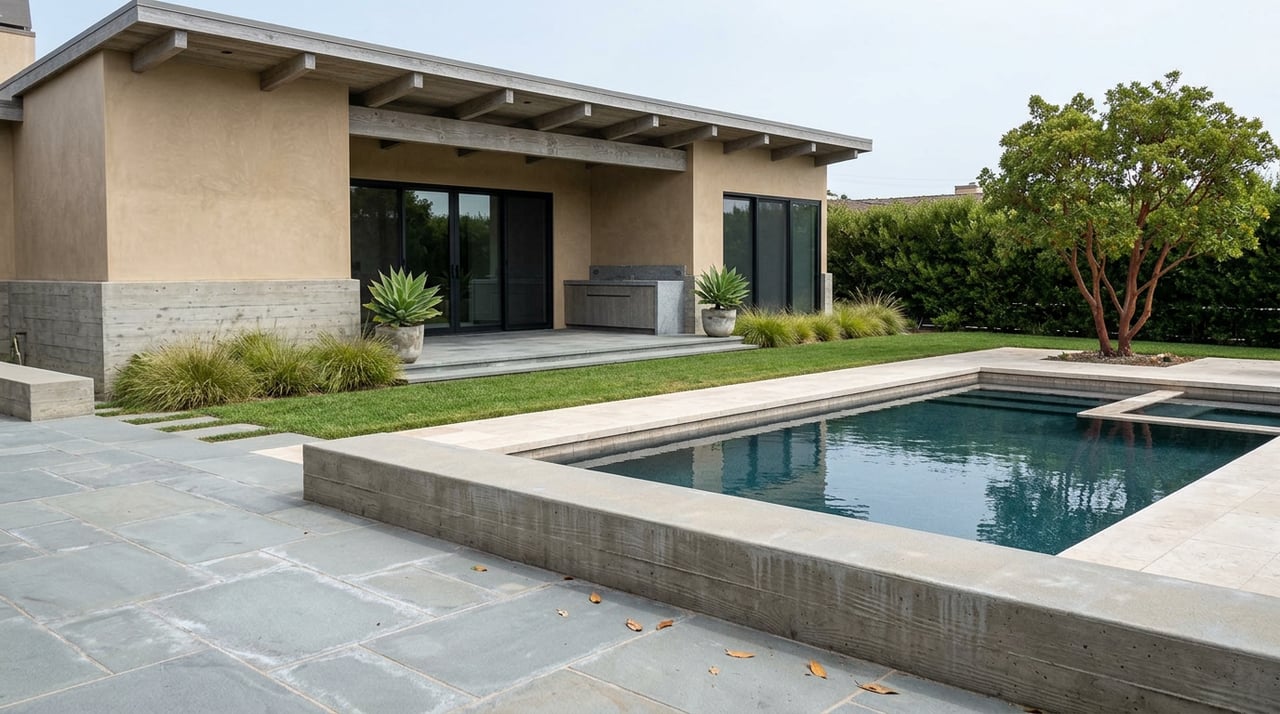
Move inland and the rules simplify considerably. Rio Highlands, a Spanish and Mediterranean-influenced development entered off Rio Del Mar Boulevard along Spanish Bay, Spyglass, and Augusta, sits within walking distance of Aptos Junior High and the Deluxe Foods shopping center, with Aptos High and Rio Del Mar Elementary a couple of miles further out. Homes here function like homes anywhere else in the county. No resort occupancy cap. No bluff to monitor. No geotechnical file to request before writing an offer. It's the plainest version of Aptos ownership, and it's the version most likely pulling the town median down toward that $1.0 to $1.25 million range while the water-adjacent listings pull it up.
Even at the lower end of the corridor, entry points aren't nothing. A vacant lot on Rio Del Mar Boulevard sold in June 2026 for $565,000, six percent under its $599,000 asking price, a reminder that even undeveloped ground in this stretch of Aptos carries a premium tied to location rather than square footage.
The practical takeaway is simple: before a median price shapes your budget, find out which Aptos it's describing. A number quoted without a neighborhood attached is doing the same blending Zillow and Redfin are doing when their own tools disagree with each other. Ask whether the property sits inside an HOA with occupancy restrictions, whether it's close enough to a bluff that a geotechnical report belongs in the disclosure package, or whether it's simply a house in a neighborhood where none of that applies. Those three answers, not the median, determine what you're actually buying.
Can I ever live in a Seascape Resort condo full time? No. The 90-day annual occupancy limit applies to owners as well as guests, so the unit cannot be used or claimed as a primary residence regardless of whether you join the resort's rental program.
Does every home in Rio Del Mar need a geotechnical report? Not every home, but any property on or near the bluff typically does, and lenders increasingly request one before closing. Homes set back from the bluff edge or outside the mapped erosion zones generally don't carry the same requirement.
Does the erosion risk in Seacliff and Rio Del Mar affect insurance costs everywhere in Aptos? No. It's most relevant to bluff-top and beachfront parcels specifically. Inland neighborhoods like Rio Highlands typically carry standard homeowner coverage without the flood or erosion-related add-ons that bluff properties often require.
If you're weighing a resort condo against a bluff-top estate against a straightforward inland house, the comparison isn't really about price per square foot. It's about which set of rules you're signing up for. Megan Lyng has spent two decades sorting through exactly these distinctions across Santa Cruz County's coastline. Let's Connect and talk through which version of Aptos actually fits what you're trying to buy.


Get assistance in determining current property value, crafting a competitive offer, writing and negotiating a contract, and much more. Contact me today.

MEGAN LYNG | CA DRE# 01421921
1041 41st Ave Santa Cruz, CA 95062